How to Identify a Honda Lawn Mower: Model, Serial Number and Age
You can identify a Honda lawn mower by finding the model name, product code, and serial number, then matching those numbers with Honda’s parts and manual information. The model tells you what machine you have, while the serial number helps narrow down its production period and the correct parts.
Have you found a faded sticker under the handle and wondered if the mower is an HRR, HRX, HRS, or something older? Are you trying to order a belt, blade, air filter, or carburetor part without accidentally buying the wrong one?
I once ordered a replacement blade for a Honda mower after checking only the engine badge. The blade looked right in the box, but the mounting shape was wrong, and I lost an afternoon making a return trip. That mistake is common, not dumb.
I wrote this guide for anyone holding a Honda mower with a dirty label, missing paperwork, or a seller who says, “It’s probably a 2018.” You’ll get a practical way to identify the mower before spending money or taking parts apart.
The right identification can save you a wasted parts order, help you set the correct cutting height, and give you a better idea of the mower’s age and value. Guess wrong, and a small repair can turn into a box of parts that never fit.
This article takes about 11 minutes to read. By the end, you’ll know how to:
- Find every useful Honda identification number on the mower.
- Read the model code without confusing engine and deck numbers.
- Estimate the mower’s age from labels, serial information, and design clues.
- Match replacement parts, manuals, recalls, and used-mower prices more safely.
How Do I Identify My Honda Lawn Mower?
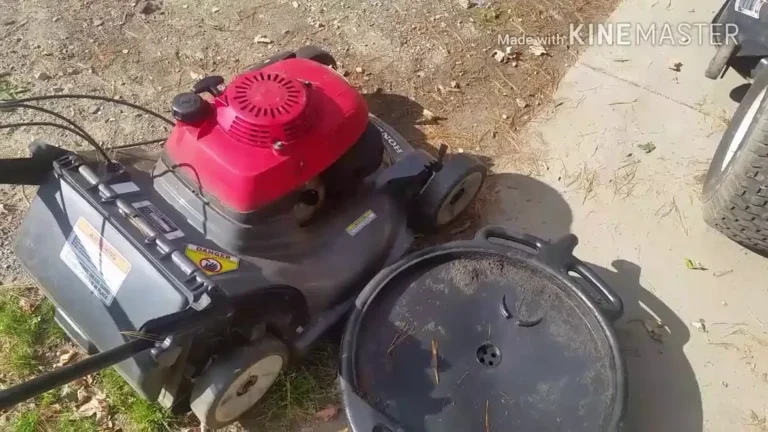
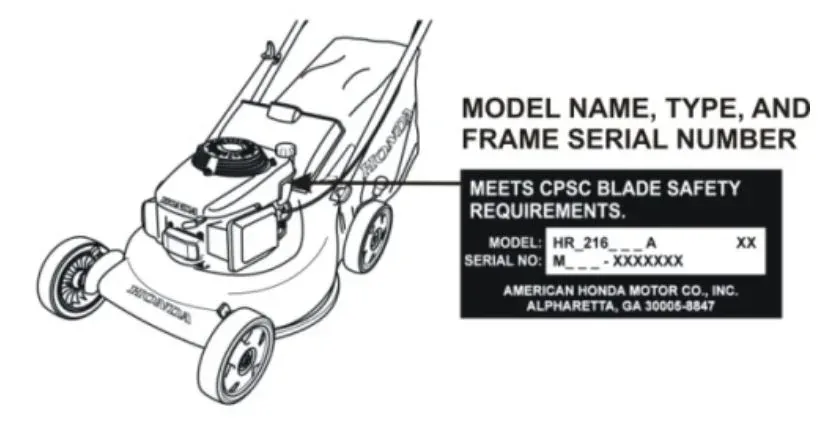
Start with the mower’s model code and product identification label, then record the serial number exactly as printed. On many Honda walk-behind mowers, the label is near the rear of the deck, behind the engine, on the side of the handle, or near the discharge opening.
The most useful information usually appears in a group like this:
- Model: HRR216, HRX217, HRS216, HRC216, or another letter-and-number code.
- Product code: A longer code that may include letters, numbers, or a suffix.
- Serial number: A unique number for that individual mower.
- Engine model: A separate code, often printed on the engine itself.
- Engine serial number: A different number that identifies the engine, not always the mower deck.
Do not treat every number on the machine as the same thing. A Honda GCV engine can be fitted to several mower models, so the engine label alone may not identify the deck, drive system, blade setup, or control cables.
Use this order:
- Park the mower on a flat surface, shut off the engine, and disconnect the spark plug wire before cleaning around the label or blade area.
- Brush away grass and dust with a dry cloth or soft brush.
- Photograph every label before the ink fades or the sticker peels.
- Write the model code and serial number on paper, including letters, hyphens, and suffixes.
- Compare the code with the mower’s physical features, such as rear-wheel drive, variable-speed control, deck material, and bag design.
- Use the exact model and serial information when choosing a manual or replacement part.
A mower marked HRX217 is not interchangeable with every HRX mower. The letter series may look close, but the transmission, deck controls, blade brake, handle arrangement, or discharge parts can differ between versions.
| Identification item | What it tells you | Where it may appear |
|---|---|---|
| Model code | The mower family and basic configuration | Deck label, rear housing, handle area |
| Product code | The exact equipment version or production listing | Main identification label |
| Serial number | The individual mower and production range | Same label or stamped plate |
| Engine model | The engine family | Engine shroud or crankcase |
| Engine serial number | The individual engine | Engine block or shroud |
| Deck size | Cutting width, often 21 inches on walk-behind models | Deck label or measured blade area |
| Drive type | Push, self-propelled, rear-wheel drive, or hydrostatic setup | Control panel and transmission area |
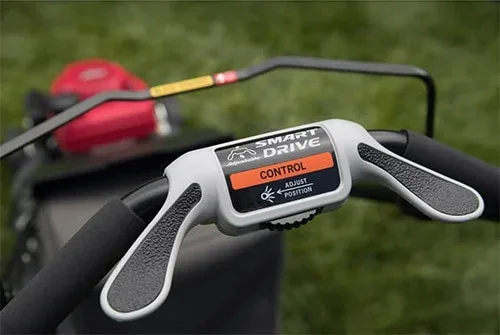
If the label is missing, physical clues can still narrow the answer. A rear-wheel-drive self-propelled mower usually has drive-control parts near the handle and a transmission connected to the rear axle, while a push mower has no drive cable or transmission system.
The safest identification method uses two matches: the printed model information and the mower’s actual design. If the label says one thing but the deck, controls, or engine arrangement says another, stop before ordering parts.
Where to Find Honda Mower Numbers
Honda identification labels are easiest to find after cleaning the rear deck, handle supports, and engine area. Labels often collect a thick layer of dried clippings because those spots sit in the mower’s airflow and splash zone.
Start at the rear of the mower and work around it. Check these areas:
- The rear discharge housing near the grass bag.
- The left or right side of the cutting deck.
- The handle support brackets.
- The upper handle control panel.
- The engine shroud and crankcase.
- The underside of the deck, only after the spark plug wire is disconnected and the mower is handled safely.
- A metal plate or stamped area near the rear axle on older machines.
Some stickers are white or silver with black printing. Older labels may be scratched, yellowed, or covered by paint and oil. A damp rag can lift dirt, but avoid soaking a damaged paper label because the ink may run.
The product identification label matters more than a logo on the engine cover. Honda used similar engines across different mower families, and a replacement engine may not be the engine installed at the factory.
What if the label shows only a partial number? Record every visible character and mark missing characters with a blank space rather than guessing. A faint “HRR216K9” and “HRR216K8” can point to different parts, even though the machines look almost identical from across the garage.
Honda model families often use letters to separate equipment types or feature groups. The exact meaning can depend on the production series, so a short code should be read with the full product number and the mower’s physical features. A helpful breakdown of Honda mower model letters can prevent a guess based on one letter alone.
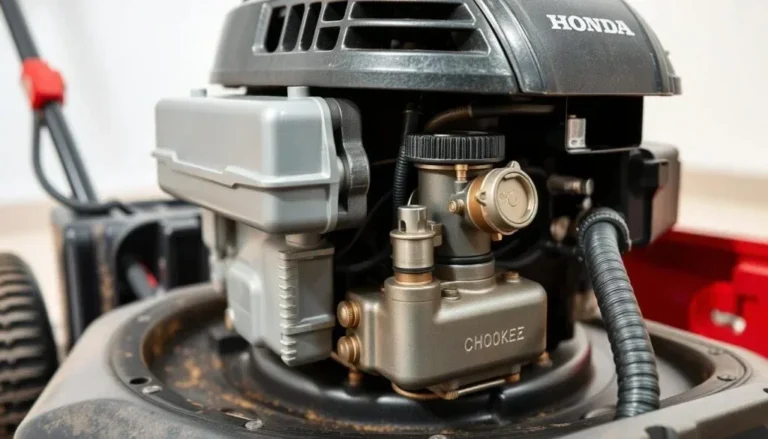
The engine model is still useful, just for a different job. It helps you choose spark plugs, air filters, carburetor parts, oil capacity information, and engine service instructions. It does not always identify the mower deck or drive system.
Pro Tip: Take one close photo of the whole label and a second photo where the model code fills the frame. A wide photo proves where the label came from, while the close photo makes a scratched character easier to read later.
If you have a loose grass bag, side discharge chute, blade adapter, or handle assembly, photograph those parts too. Honda changed small fittings across model generations, and the old part in your hand may reveal more than a faded sticker.
Reading Honda Model Codes Correctly
A Honda mower model code identifies a mower family, but the complete product code and serial range usually determine the exact version. The first letters and numbers can point you in the right direction, while suffixes and production details help confirm the fit.
Common Honda walk-behind families include:
- HRR: General residential walk-behind mowers, often with push or self-propelled versions.
- HRX: Higher-feature residential mowers, commonly associated with advanced deck and drive controls.
- HRS: Models designed around side discharge and specific deck arrangements.
- HRC: More heavily built commercial or professional-oriented walk-behind mowers.
- Older HR models with different numbers and letter combinations.
These family names are a starting point, not a complete parts answer. An HRX217 version from one production period may use a different cable, wheel, belt, or control assembly from another version.
A product code may include a base model followed by a suffix or revision. The suffix can identify a production change, a drive arrangement, a deck variation, or a market version. Do not drop the suffix when writing down the code.
Honda’s mower families and older models cover a large span of equipment, so a comparison of Honda lawn mower models can help place an unfamiliar machine in the right family. That matters when a seller calls an old HRR model an HRX simply because both mowers have red housings and rear wheels.
The deck design gives useful confirmation:
- A plastic composite deck points toward some HRX versions, though color and material alone are not proof.
- A steel deck may appear on several Honda families, so the model label still matters.
- A blade-brake clutch can allow the engine to keep running while the blade stops when the control is released.
- A single-speed or variable-speed drive changes the cable and transmission setup.
- A rear bagger, side-discharge chute, or mulch-control system can narrow the model family.
My second useful lesson came from a mower with a nearly unreadable sticker. I matched its handle controls and rear axle setup to a parts diagram, then found that the machine had a different suffix from the one I first assumed. The extra ten minutes of checking saved me from ordering the wrong drive cable.
Never identify a Honda mower by paint color alone. Red, black, gray, and silver parts may change because of production runs, replacement panels, sunlight, or repainting.
Dating A Honda Lawn Mower
Honda mower age is usually estimated from the serial number, model history, label style, and physical wear rather than from one universal date code. A serial number can narrow the production period, but the exact decoding method varies by product family and manufacturing run.
Use several clues together:
- Record the complete model and serial number.
- Search the mower’s manual or parts information by the full code, not just the engine model.
- Compare the mower’s control layout, deck material, wheel design, and bag connection with known versions in the same family.
- Check for a manufacturing date sticker, inspection label, or dealer service tag.
- Compare the condition of the engine, deck, handle, wheels, and transmission.
- Treat the result as an age range unless an original purchase record confirms the date.
A production date and purchase date are not always the same. A mower could sit in a store or garage for a season before someone used it, while a heavily worn machine may have worked hard in a short period.
The label’s condition can help, but it cannot prove age. Sun-faded plastic, cracked tires, a polished deck, or a new engine may reflect storage, maintenance, or replacement parts rather than the original build date.
The owner’s manual is a strong confirmation tool because it often lists the model family, control layout, maintenance schedule, and safety instructions. If the paper manual is gone, use the exact label information to locate the correct Honda mower owner’s manual instead of downloading a manual for a similar-looking model.
A serial number can also matter for safety notices. A recall or service campaign may apply only to certain model and serial ranges, so use a Honda lawn mower recall check when the machine has an unusual control problem, fuel concern, blade issue, or notice from a previous owner.
What Wear Can And Cannot Tell You
Wear helps estimate how a mower was used, but it does not replace the identification label. A clean deck with original wheels may indicate light residential use, while a bent handle, loose wheel, worn drive cable, and packed underside suggest harder service.
Look at these areas:
- Engine: Hard starting, smoke, oil leaks, or hunting at idle may point to maintenance needs.
- Deck: Rust-through, cracks, weld repairs, and bent edges affect safety and value.
- Blade: A rounded or deeply nicked blade may show poor maintenance.
- Wheels: Wobble and worn tread matter on a self-propelled mower.
- Drive system: A mower that stops pulling under load may need a belt, cable, transmission, or wheel repair.
- Controls: Stiff or frayed cables can make the mower unsafe to operate.
Important Tip: Never run a mower with a cracked deck, loose blade, missing discharge guard, or damaged control cable. A replacement part is cheaper than a preventable accident, and a qualified repair shop should handle a structural or blade-brake problem.
Choosing Manuals and Replacement Parts
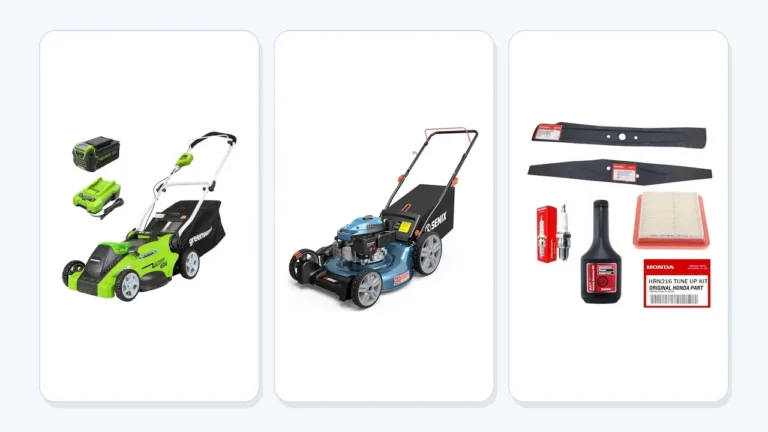
Order parts by mower model, product code, and serial range, then confirm the part against the machine before installation. A generic listing that says “fits Honda 21-inch mower” is not enough for many control, drive, and blade components.
Parts most likely to vary by exact version include:
- Blade and blade adapter.
- Drive belt and transmission belt.
- Self-propelled cable.
- Blade-brake clutch cable.
- Grass bag and bag frame.
- Wheels and wheel bushings.
- Air filter and air-filter cover.
- Carburetor and fuel-system parts.
- Handle hardware and control levers.
- Mulch plug and side-discharge chute.
A blade needs more than the right length. Check the center-hole shape, mounting hardware, lift direction, thickness, and blade-brake arrangement. Turn off the engine, remove the spark plug wire, and keep hands clear of sharp edges before measuring or removing anything.
The same caution applies to drive parts. A cable that is one inch too short may fit through the housing but prevent the transmission from fully engaging or releasing. That can leave the mower creeping when you release the control, which is a safety problem.
Use the manual for maintenance intervals, oil type, spark plug information, control adjustments, and safe operating steps. Use the parts listing for fitment, revisions, and serial-range changes.
If a manual lists several versions, compare the illustrations with your actual mower. The handle bracket, bag frame, blade control, and wheel shape should match before you trust the part number.
How much does a Honda mower weigh? The answer depends on the model, deck material, drive system, battery or engine setup, bag, and installed equipment. A useful discussion of Honda lawn mower weight can help when you need to load the mower, move it through a gate, or compare a push model with a self-propelled version.
Never lift a running mower, and never tip a gasoline mower with the air filter or carburetor facing down unless the manual gives a safe position. Fuel and oil can move into places that cause hard starting, smoke, or damage.
Checking A Used Honda Mower Before Buying
A used Honda mower is worth considering only after the model, serial number, safety equipment, engine, deck, and drive system all pass a hands-on check. A familiar Honda badge does not cancel out rust, missing guards, expensive transmission repairs, or unavailable parts.
Take this inspection order:
- Ask for a clear photo of the model and serial label before making the trip.
- Check that the model on the label matches the mower being sold.
- Inspect the deck for cracks, holes, major bends, and rough welds.
- Confirm that the discharge guard and grass bag are present.
- Check the oil level and look for metal, fuel smell, or heavy contamination.
- Start the engine only outdoors, away from doors, children, pets, and dry grass.
- Test the blade-control handle and confirm the blade stops when the control is released.
- Test the drive system on a clear, level surface if the mower is self-propelled.
- Check wheel wobble, handle looseness, cable damage, smoke, and unusual noise.
- Compare the asking price with the repair cost, not with the seller’s favorite number.
A common mistake is checking only whether the engine starts. A mower can start easily and still need a transmission, blade clutch, deck, wheels, and control cables.
I once inspected a used self-propelled mower that started on the second pull and sounded smooth. The seller had not mentioned that the drive slipped on a slope, and the worn wheels were nearly smooth, so the running engine hid the expensive work underneath.
A detailed used Honda mower buying guide can help you build a short inspection list before meeting a seller. Bring a flashlight, work gloves, a rag, and a phone for label photos.
| Used-mower finding | What it may mean | Buying response |
|---|---|---|
| Clean oil and easy starting | The engine may have received regular care | Still test controls and drive |
| Blue smoke | Oil may be entering combustion | Price a repair or walk away |
| Fuel leaking from carburetor | Needle, gasket, or fuel system problem | Do not operate until repaired |
| Bent or cracked deck | Structural and safety concern | Usually avoid unless repair is clear |
| Missing discharge guard | Unsafe and costly to replace | Treat as a serious defect |
| Drive slips or surges | Cable, belt, wheel, or transmission issue | Reduce the offer sharply or pass |
| Model label missing | Parts identification becomes harder | Buy only with strong documentation |
| Freshly washed engine | Dirt may be hidden temporarily | Check again after running |
A mower with a common model and complete safety equipment is usually easier to maintain than a cheaper machine with a missing label. I’d pick the documented mower with honest wear over the shiny mower with mystery parts.
Key Takeaways:
- The mower model identifies the family, while the complete product code and serial number identify the exact version.
- The engine number helps with engine parts but may not identify the mower deck.
- Photograph every label and write down suffixes before ordering parts.
- Confirm the blade, drive system, controls, guards, and manual before repairing a used Honda mower.
Common Identification Mistakes
Most Honda mower identification errors happen when owners rely on one number, one letter, or one visual clue. A careful match of the label, engine, deck, and controls gives a much safer answer.
Avoid these mistakes:
- Using the engine model as the mower model.
- Leaving off a suffix after the main model number.
- Confusing a serial number with a product code.
- Buying a blade based only on deck width.
- Assuming all HRR or HRX models share the same cables.
- Trusting a seller’s year estimate without label photos.
- Matching a manual by engine name alone.
- Ignoring a missing discharge guard or blade-control problem.
- Cleaning a label with a solvent that removes the printing.
- Tilting the mower before disconnecting the spark plug wire.
A model code should be copied character by character. The letters “I,” “O,” and “S” can be confused with numbers on a worn label, and a zero can look like the letter O under poor light.
A phone camera can help reveal a faint label. Photograph it straight on, avoid glare, and tap the screen to focus on the printed characters. Do not edit the image so heavily that a character changes shape.
If the number remains uncertain, compare several physical details before making a parts decision. A few minutes of careful checking beats a return label, a second shipping charge, and a mower spread across the garage floor.
When A Repair Shop Should Handle Identification
A repair shop is the safer choice when the model label is missing and the suspected repair involves the blade, blade brake, fuel system, or structural deck. A professional can identify parts from the machine and spot hazards that a quick online match may miss.
Get help when:
- The deck is cracked, badly bent, or rusted through.
- The blade remains engaged after the control is released.
- The mower moves with the drive control released.
- Fuel leaks from the tank, hose, or carburetor.
- The flywheel, crankshaft, or blade adapter appears bent.
- The engine has severe vibration or a loud knocking sound.
- A safety guard or control part is missing.
- The model number conflicts with the machine’s physical layout.
Do not keep testing a mower that vibrates hard after a blade strike. Shut it off, disconnect the spark plug wire, and have the blade, adapter, crankshaft, and deck checked.
A repair shop may also help when the label is unreadable but the mower has a recognizable control layout. Bring photos of every side, the engine, the deck underside, the wheels, and the handle controls.
FAQs About How Do I Identify My Honda Lawn Mower
Where is the model number on a Honda lawn mower?
The Honda mower model number is commonly printed on a product label near the rear deck, handle support, discharge opening, or engine area. Older mowers may use a metal plate or stamped marking. Clean gently, photograph the label, and record the full model code, product code, and serial number.
Is the Honda engine number the mower model number?
No, the Honda engine number identifies the engine family, not always the mower. Honda used similar GCV and other engine families across different mower decks. Use the mower’s own product label for blade, wheel, cable, bag, drive, and deck parts.
How can I tell how old my Honda lawn mower is?
Estimate Honda mower age by combining the complete model code, serial number, label style, control layout, deck design, and service records. A serial range may narrow the production period, but the purchase date can be later than the build date.
What if the Honda mower serial number is worn off?
A worn Honda mower serial number can sometimes be replaced with physical identification clues, including the model family, deck material, handle controls, wheel design, engine model, and bag connection. Take clear photos and ask a repair shop to compare the machine with parts information.
Can I order Honda mower parts using only the model number?
Sometimes, but the complete model code and serial range are safer for Honda mower parts. Blades, cables, drive components, bags, and control hardware may change between versions. Confirm the part against the manual, illustration, and the actual mower before installation.
Should I buy a Honda mower with no identification label?
A Honda mower with no identification label deserves extra caution. You may still identify the machine through its design and engine, but correct parts and safety notices become harder to confirm. Buy only after checking the deck, controls, guards, engine, and likely repair cost.
Make the Identification Match the Machine
Identifying a Honda lawn mower is mostly careful detective work, not a guessing contest. Find the label, copy every character, separate the mower model from the engine model, and confirm the code against the deck and controls.
My practical opinion is to spend five extra minutes on identification before ordering anything. That small pause can protect you from the wrong blade, the wrong cable, a bad used-mower purchase, or a repair that creates a new safety problem.
Start by cleaning and photographing the main label today. Once the model and serial information are written down, manuals, parts, age estimates, and repair decisions become much easier.