Honda Lawn Mower Pull Cord Hard to Pull: What to Check
A Honda lawn mower pull cord that’s hard to pull usually has a brake, blade, recoil starter, or engine problem behind it. Start with the safety bar and spark plug wire, then check for a jammed blade, a flooded cylinder, or oil-related trouble before forcing the rope.
Does the rope feel stiff only on the first pull, or does the handle stop like it hit a brick wall? Did the mower run normally last time, then become stubborn after tipping it, hitting thick grass, or storing it for a few months?
I once pulled harder and harder on a mower that had a small stick wedged under the deck. The rope finally moved, but the recoil starter housing cracked and turned a five-minute cleanup into a parts hunt; this is a common mistake, not a dumb one.
I wrote this guide for anyone standing in the yard with a sore hand and a mower that refuses to cooperate. You’ll get a safe order of checks, plain reasons for each test, and a clear point where a repair stops being worth your time.
If you catch the cause early, you can avoid a damaged starter rope, bent blade, or engine repair. Skip the safety steps, and a mower can start unexpectedly, throw debris, or turn a simple fix into an expensive one.
This takes about 9 minutes to read, and the checks will help you:
- Tell a normal engine compression pulse from a real lockup.
- Find deck jams, brake problems, recoil faults, and oil issues.
- Test the mower without putting your fingers near the blade.
- Decide when a replacement rope or shop repair makes sense.
Honda Lawn Mower Pull Cord Hard to Pull: the Fast Diagnosis
A hard pull cord usually comes from one of four places: the flywheel brake, a blocked blade, the recoil starter, or internal engine resistance. A healthy mower may give a firm pulse as the piston compresses air, but the rope should still travel through a full stroke with steady effort.
Start with the mower on flat ground, the engine off, and the fuel valve closed if the model has one. Keep your hands away from the blade, then follow these steps in order:
- Release the safety bar and remove the spark plug wire. Pull the rubber boot away from the spark plug, not the wire itself, and place the boot where it can’t touch the plug.
- Check the brake action. Squeeze the handlebar safety control and watch or listen for the brake releasing near the flywheel. The brake should move freely instead of staying pressed against the flywheel.
- Inspect under the deck. Look for grass packed around the blade, a stick, wire, rope, or stone wedged between the blade and deck.
- Test the blade by hand only with the spark plug wire disconnected. Wear gloves, turn the blade slowly, and stop if anything catches.
- Pull the starter rope again. If the blade turns freely but the rope still feels rough, the recoil starter may be dirty, damaged, or tangled.
- Check the oil level and mower position. Low oil can damage an engine, while too much oil or a tipped mower can send oil into the cylinder and make starting feel unusually stiff.
- Remove and inspect the spark plug. With the plug out, pull the rope carefully. A much easier pull points toward cylinder compression, liquid in the cylinder, or a fuel-related issue rather than a locked starter.
A mower that becomes easier with the spark plug removed is not automatically broken. The plug releases compression, so the rope naturally feels lighter, much like opening a pressure valve before turning a pump.
| What you feel at the handle | Most likely cause | First safe check |
|---|---|---|
| Rope stops suddenly | Blade jam, brake stuck, internal seizure | Disconnect the plug wire and inspect the deck |
| Rope pulls hard once per revolution | Normal compression or engine resistance | Remove the spark plug and test again |
| Rope barely moves and feels gritty | Damaged recoil starter | Inspect the starter housing and pulley |
| Rope pulls, then snaps back sharply | Ignition timing or recoil problem | Stop pulling and inspect the starter |
| Rope pulls normally with plug removed | Flooding, oil in cylinder, or compression issue | Inspect the plug and mower position |
| Rope feels loose with no spring return | Broken recoil spring or rope | Open the recoil housing only after safety steps |
The fastest clue comes from separating the engine from the starter. If the rope stays hard with the spark plug removed, focus on the blade, brake, crankshaft, and recoil assembly. If the rope becomes easy, focus on the plug, fuel, oil, and cylinder.
A mower that also refuses to fire may have more than a stiff rope problem. A useful Honda mower no-start guide can help sort out fuel, spark, air, and compression after the pull resistance has been addressed.
Pro Tip: Pull the rope slowly once before using a full starting stroke. A sudden hard stop tells you more about a jam or mechanical bind than repeated force does.
Check the Safety Brake, Blade, and Deck
The safety brake can make a perfectly good engine feel locked when the handle control is released. The brake stops the blade quickly after you let go, so the brake arm, cable, or spring must move into the running position when you hold the control bar.
Look along the handle and cable for kinks, crushed sections, or a loose connection. At the engine, the cable should move the brake arm through its full travel; built-up dirt, rust, or a stretched cable can leave the brake partly engaged.
Before reaching under the deck, disconnect the spark plug wire and keep the plug boot away from the plug. Never rely on the handle control alone, because a mower can rotate or start if the ignition system still has a path to spark.
With the mower upright, use a flashlight to inspect the discharge opening and the space around the blade. Dried grass can become as hard as cardboard, while a thin piece of wire may wrap around the blade hub and create a tight, ugly bind.
If the mower was recently tipped, check the direction used. Most four-stroke walk-behind mowers should be tipped with the air filter and carburetor side higher than the spark plug side, based on the model’s instructions; tipping the wrong way can move oil into places it shouldn’t be.
I once chased a “bad engine” complaint that turned out to be wet grass wrapped tightly around the blade hub. The deck looked clean from the side, but the underside felt like a sticky ball of rope, and five minutes of careful cleaning restored normal movement.
Could a dull blade make the cord hard to pull? A dull blade alone usually won’t lock the rope, but a bent blade, packed debris, or damaged blade adapter can. A blade that wobbles, scrapes the deck, or stops at one spot deserves repair before the mower runs again.
Check these parts without guessing:
- Blade edges and the center blade bolt.
- The blade adapter or blade boss under the blade.
- The crankshaft area for a bent or leaking seal.
- The deck for dents that touch the blade.
- The brake arm, cable, and return spring.
- Grass or string packed around the blade hub.
A damaged blade can release metal or throw debris at high speed. If the blade is bent, cracked, loose, or deeply rusted, replace it with the correct part instead of trying to straighten it in the driveway.
Important Tip: Never test a hard-to-pull mower by bypassing the safety bar or tying the control down. That removes a safety feature designed to stop the blade when you release the handle.
Inspect the Recoil Starter and Pull Rope
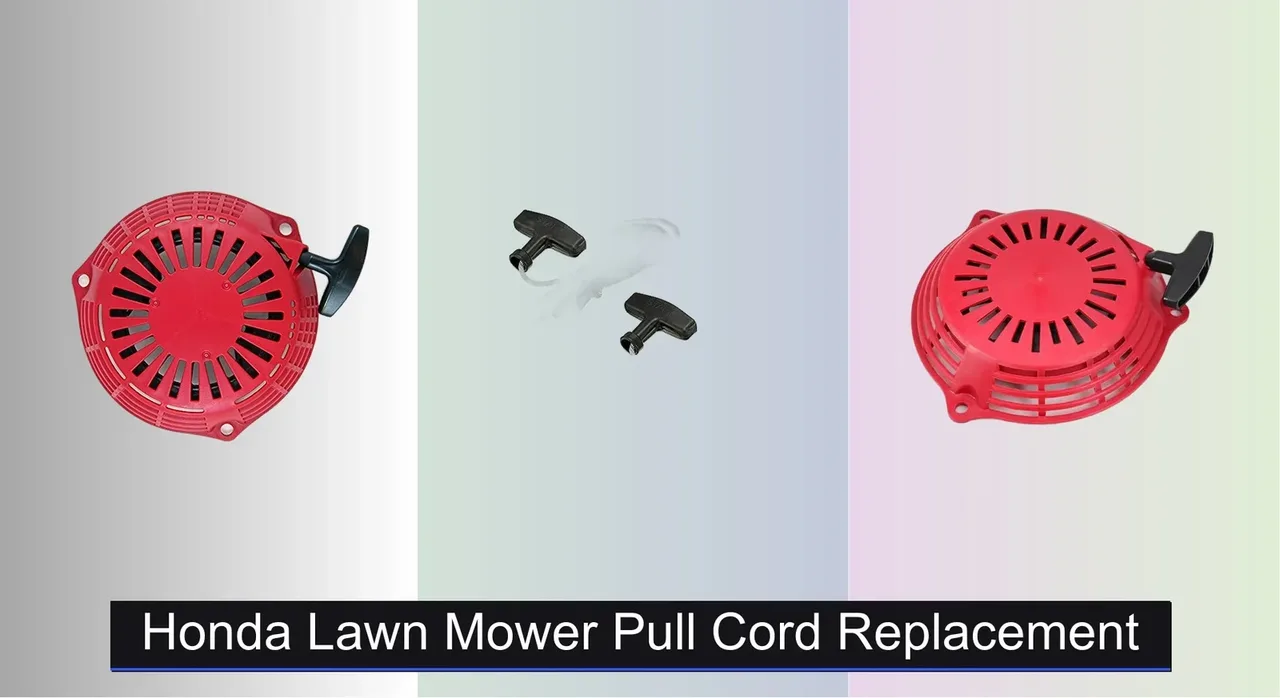
The recoil starter is the spring-loaded housing that winds the rope back onto a pulley. A frayed rope, broken spring, warped pulley, or loose starter cover can make the pull feel gritty, uneven, or almost impossible.
With the spark plug wire disconnected, remove the starter cover if the cover sits on top of the engine. Keep one hand on the cover as you loosen it, because some models contain a spring under tension and a loose spring can jump out with sharp force.
Pull the rope a few inches and watch the pulley. The pulley should rotate smoothly, the rope should wind into neat layers, and the handle should return without dragging. A rope that rubs against the housing often leaves fuzzy fibers around the opening.
A recoil problem often has a distinctive feel:
- Gritty movement points toward dirt, rust, or a damaged pulley.
- A rope that won’t return points toward a weak or broken spring.
- A rope that pulls out but won’t turn the engine points toward a broken starter pawl.
- A sharp snap-back can mean the starter or ignition timing needs attention.
- A rope that jams at the same spot may be crossed or pinched inside the housing.
Don’t flood the recoil housing with oil. Oil can attract grit and make the rope pulley sluggish; a small amount of the lubricant listed in the mower’s service instructions is safer than soaking the assembly.
If the rope is badly frayed but the pulley and spring work well, replacing the cord may solve the problem. The replacement rope needs the right diameter and length, and the spring must be safely unwound before the old cord comes out. Detailed Honda pull cord replacement steps are useful if the recoil assembly is serviceable but the rope itself has failed.
I’d replace the whole recoil starter when the pulley is cracked, the spring is distorted, or the starter pawls no longer engage. A new rope on a damaged pulley is a bandage, and it may leave you stranded with a handle in your hand.
Check Compression, Oil, Fuel, and the Spark Plug
If the blade turns freely and the recoil starter looks fine, the engine may be creating unusually high resistance. The common causes include oil in the cylinder after tipping, a fuel-flooded engine, a stuck valve, or internal damage.
Remove the spark plug wire first, then remove the spark plug with the correct socket. Keep dirt out of the plug hole, and don’t put your face over the opening while turning the engine because fuel or oil may spray out.
Pull the rope several times with the plug removed. If oil or fuel comes from the plug hole, stop and clean the mess before testing the engine again. Wipe the plug, allow the cylinder to clear in a ventilated area, and correct the mower’s position before reinstalling a clean or properly gapped plug.
A wet plug often means the engine is flooded. Flooding can happen after too many starting attempts, a stuck carburetor float, or a fuel valve that doesn’t shut off; the rope may feel different because liquid does not compress like air.
Low oil creates a different concern. The engine may still pull normally at first, but running with too little oil can score internal parts and lead to a locked crankshaft. Check the dipstick on level ground using the procedure for that Honda engine, and never add oil just because the mower feels stiff.
The compression release mechanism is an internal feature that slightly reduces starting resistance during part of the compression stroke. If that mechanism, a valve, or the camshaft has a problem, the rope may jerk hard or stop at the same point on every pull.
A compression tester can help, but a number without the correct model specification doesn’t tell the whole story. A repair shop can check valve clearance, cam timing, crankshaft movement, and internal damage when the mower remains hard to pull with the plug removed.
A mower with a bent crankshaft may vibrate badly, especially after the blade hits a root, curb, or hidden rock. In that case, the pull cord problem is a warning sign, not the main failure.
Pro Tip: Mark the mower’s normal upright position before tilting it for cleaning. That small habit keeps oil from wandering into the air filter, carburetor, or cylinder.
Common Repairs, Costs, and When to Stop
The repair depends on the point where resistance begins. A deck cleanup costs time, a rope replacement costs a small part and careful work, while a seized engine may cost more than an older mower is worth.
| Problem | Typical repair effort | Good choice when |
|---|---|---|
| Grass or object under deck | 10 to 30 minutes | The blade and crank turn freely after cleaning |
| Loose or frayed pull rope | 20 to 60 minutes | The pulley and spring remain sound |
| Damaged recoil starter | 30 to 90 minutes | The engine turns normally with the plug removed |
| Stuck brake cable or arm | 20 to 60 minutes | The brake moves after cleaning or adjustment |
| Flooded cylinder or oil-filled air filter | 30 to 90 minutes | The engine clears and the plug produces a healthy spark |
| Bent blade or blade adapter | 30 to 90 minutes | The crankshaft itself isn’t bent |
| Valve or internal engine fault | Shop diagnosis | The mower has good value and little rust |
| Seized or badly damaged engine | Major repair | The mower is newer or has a strong deck and transmission |
Prices vary by model, local labor, and parts availability, so treat the chart as a time guide rather than a quote. An inexpensive repair makes sense when the deck is solid, the wheels and handle are good, and the engine only needs a starter rope or brake adjustment.
Is it worth repairing an older Honda mower? Often, yes, when the mower has a sound deck and the fault is outside the engine. A detailed Honda mower repair decision guide can help compare repair cost, mower condition, and replacement value without relying on age alone.
I wouldn’t spend heavily on an engine with a cracked deck, missing safety parts, severe rust, and a transmission that already slips. A mower can have a famous name and still be a poor buy if several small failures arrive at once.
Check the model and serial information before ordering parts. Honda used different recoil starters, blade adapters, cables, and carburetor layouts across mower families, so a part that looks close may fit badly or create a safety problem.
A recall or safety notice is a separate issue from ordinary wear. If you want to check whether a particular mower has an open notice, use the correct Honda mower recall check with the full model and serial information, not just the brand name.
A Safe Restart Test
Once the cause has been corrected, restart the mower in a controlled area with clear footing and no loose objects nearby. Reinstall the spark plug, attach the plug wire firmly, check the oil level, and confirm that the blade area is clear.
Use this order:
- Set the mower on level ground.
- Confirm the blade is tight and the deck is clear.
- Check the air filter, oil, and fuel condition.
- Attach the spark plug wire.
- Hold the safety control against the handle.
- Pull with a smooth, full stroke instead of a short yank.
- Listen for scraping, sharp knocks, heavy vibration, or repeated rope snap-back.
- Release the control and confirm that the blade stops promptly.
Stop immediately if the cord becomes hard again, the blade drags, the engine bangs, or the mower shakes. A second test won’t fix a mechanical bind, and force can turn a manageable repair into a broken starter or bent crankshaft.
Keep children, pets, and bystanders away from the discharge area during testing. Wear sturdy shoes and eye protection, especially after working around dry grass, broken wire, or metal debris.
Key Takeaways:
- Disconnect the spark plug wire before inspecting the blade or starter.
- A rope that stays hard with the spark plug removed points toward a mechanical bind.
- A rope that becomes easier with the plug removed points toward compression, flooding, oil, or valve trouble.
- Stop using the mower if the blade is bent, the crankshaft wobbles, or the engine remains locked.
FAQs About Honda Lawn Mower Pull Cord Hard to Pull
Why is my Honda lawn mower pull cord hard to pull?
A Honda lawn mower pull cord becomes hard to pull when the blade is jammed, the flywheel brake stays engaged, the recoil starter fails, or the engine has unusual compression resistance. Disconnect the spark plug wire, check the deck, then remove the spark plug to separate starter and blade trouble from cylinder-related resistance.
Can too much oil make a Honda mower pull cord hard to pull?
Yes, too much oil can enter the cylinder after overfilling or tipping the mower and create strong resistance because liquid doesn’t compress like air. Remove the spark plug, clear the cylinder safely, correct the oil level, and inspect the air filter before trying to start the Honda mower again.
Should I turn the blade by hand if the pull cord is stuck?
Yes, but only after disconnecting the spark plug wire, keeping the plug boot away from the plug, and wearing gloves. Turn the blade slowly from a safe grip point, never near the cutting edge. A blade that catches, scrapes, or wobbles needs repair before engine testing.
Why does the pull cord jerk back on my Honda mower?
A Honda mower pull cord can jerk back because of ignition timing, a damaged recoil starter, a stuck valve, or a compression-release problem. Stop pulling if the handle snaps sharply, since repeated force can injure your hand or damage the starter housing and rope.
Can a bent blade cause a hard pull cord?
Yes, a bent blade or blade adapter can contact the deck and make the pull cord difficult to move. A dull blade by itself usually won’t lock the rope, but impact damage, packed debris, or a bent crankshaft can. Check for wobble and scraping before running the mower.
Get the Mower Moving Without Guesswork
A hard Honda mower pull cord is a symptom, not a diagnosis. Start with the safety brake and deck, separate the recoil starter from the engine by removing the spark plug, then stop if the blade, crankshaft, or internal engine still feels locked.
My practical choice is to repair a clean mower with a solid deck and a simple rope, brake, or debris problem. If the mower has several worn systems or serious engine damage, put the repair money toward a better replacement and save yourself the next Saturday afternoon of wrestling with a stubborn cord.