Honda Lawn Mower Running Rough: Diagnose Surging, Smoke and Power Loss
A Honda lawn mower running rough usually has a restricted air filter, stale fuel, a dirty carburetor, a worn spark plug, or a blade and engine load problem. Start with the air filter, fuel, spark plug, and blade before touching carburetor adjustments.
Does the engine speed rise and fall while you mow, cough when the grass gets thick, or blow smoke after you tip the mower? Those symptoms feel like one big engine problem, but each one points toward a different check.
I once rushed through a mower cleanup and skipped the air filter because the outside looked clean. The engine still stumbled under load, and I spent an afternoon chasing the carburetor before finding a packed layer of dust on the inside. That’s a common mistake, not a dumb one.
I wrote this guide for homeowners who want a straight path from symptom to fix without buying random parts or turning a simple repair into a driveway disaster. You’ll get the same basic process I use before deciding if a mower needs a shop.
A correct diagnosis can save you a carburetor purchase, stop black smoke before it fouls the plug, and help prevent blade damage from shaking the engine. Skip the basic checks, and you may keep cleaning the wrong part while the real fault gets worse.
This should take about 11 minutes to read, and it’ll help you:
- Match rough running symptoms with likely causes.
- Clean and inspect the fuel, air, spark, and cutting systems in the right order.
- Tell normal smoke from a serious oil or fuel problem.
- Fix surging and power loss without making unsafe adjustments.
- Decide when a tune-up kit or professional repair makes sense.
Honda Lawn Mower Running Rough: Diagnose It in the Right Order
A rough-running Honda mower needs a simple process: shut it down safely, check the cutting load, inspect air and fuel, test the spark plug, then clean the carburetor only if the earlier checks don’t solve the problem.
Start on a flat surface with the engine cool. Remove the spark plug boot before reaching under the deck, and never put your hand near the blade just because the engine has stopped.
1. Check the blade and deck first
A bent blade, packed grass, or a damaged blade adapter can make a healthy engine sound sick. The engine may shake, slow down, or surge as the blade meets uneven resistance.
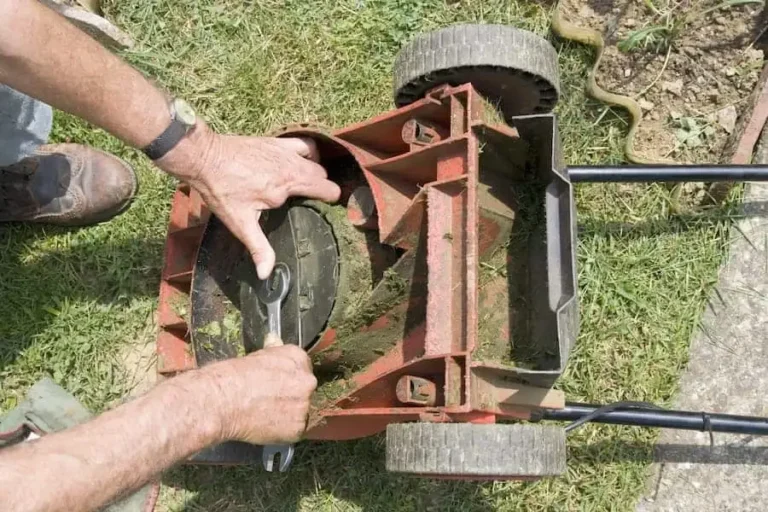
Disconnect the spark plug wire, turn the mower on its side with the carburetor and air-filter side facing up, and inspect the deck. Remove wet grass with a tool, not your fingers, then rotate the blade by hand and look for wobble.
A blade that feels loose, strikes the deck, or has a large bend needs attention before another mowing attempt. I’d replace a badly bent blade rather than trying to hammer it straight, because balance matters as much as sharpness.
2. Inspect the air filter
A foam air filter catches dust before it reaches the engine. A clogged filter restricts air and can cause black smoke, a lazy throttle response, or an engine that runs rough after warming up.
A paper filter should be replaced if it’s dirty, oily, wet, or crushed. A serviceable foam filter can usually be washed in warm soapy water, squeezed gently, dried fully, and lightly coated with the oil type called for by the mower manual.
Never run the mower for a long period without its filter. A quick test with the filter removed may point toward restriction, but dust can enter the cylinder and score the engine if you keep mowing that way.
3. Check fuel quality and flow
Gasoline that has sat through several months can lose volatility and leave sticky deposits in the carburetor bowl. The result may be hard starting, uneven RPM, stalling, or power loss when the blade enters thick grass.
Drain questionable fuel into an approved container and refill with fresh gasoline that matches the engine manual. Don’t pour old fuel onto soil, into a drain, or into household trash.
Inspect the fuel cap vent, tank outlet, fuel line, and any inline filter. A blocked vent can let the engine run briefly before vacuum builds in the tank, while a pinched line can starve the carburetor.
4. Inspect the spark plug
The spark plug tells you what the engine has been receiving. A dry, light gray or tan insulator often points toward normal combustion, while a wet plug suggests flooding, and heavy black soot usually points toward too much fuel or too little air.
Remove the plug with the correct socket and check the electrode, porcelain, and metal shell. Replace a plug with cracked porcelain, a rounded electrode, heavy deposits, or a damaged gasket.
Use the plug type and gap listed for your exact Honda engine. A plug that threads in but has the wrong reach can damage the engine, so matching the mower model alone isn’t always enough.
5. Move to the carburetor
A carburetor meters gasoline and air through small passages. Gum or dirt in the main jet can let the mower idle but starve it under load, while a sticky float or needle can cause flooding and fuel leakage.
If the mower starts, runs unevenly, and improves briefly when the choke is partly closed, the fuel mixture may be too lean from a restricted jet or passage. Choke use adds fuel, so temporary improvement is a clue, not a repair.
A mower that keeps surging after fresh fuel, a clean filter, and a good plug may need carburetor cleaning or replacement. Take photos before removing linkages, and keep tiny springs in a tray because losing one can turn a ten-minute job into a parts hunt.
A full symptom guide can help if the cause still isn’t clear: Honda lawn mower troubleshooting works best as a symptom-by-symptom check rather than a parts-swapping list.
| Symptom | Most likely area | First check | Common repair |
|---|---|---|---|
| RPM rises and falls at idle | Carburetor or fuel flow | Fresh fuel and clean jet | Clean carburetor or replace contaminated fuel |
| Black smoke | Restricted air or excess fuel | Air filter and choke | Replace filter, correct choke, inspect carburetor |
| White or blue smoke | Oil entering combustion | Oil level and tilt history | Correct oil level, clean plug, inspect engine |
| Dies in thick grass | Blade load, air restriction, or lean fuel mixture | Deck, blade, filter | Clear deck, sharpen or replace blade, service fuel system |
| Starts and dies | Fuel delivery or blocked cap vent | Fuel flow and vent | Clean carburetor, replace stale fuel, inspect vent |
| Strong vibration | Blade, adapter, or crankshaft | Blade tightness and balance | Replace damaged blade or seek repair |
The table gives you the first direction, not a guaranteed diagnosis. A mower with two faults at once can show mixed symptoms, especially after winter storage.
- Start with the blade, deck, air filter, fuel, and spark plug.
- Treat choke improvement as a fuel-mixture clue, not a fix.
- Disconnect the spark plug boot before working near the blade.
- Replace damaged or badly contaminated parts instead of forcing a cleaning job.
Why A Honda Mower Surges, Smokes, or Loses Power
Surging means the engine speed repeatedly rises and falls without a steady change in throttle demand. Smoke and power loss have different causes, so identifying the exact behavior saves time.
Honda mower surging and hunting RPM
A surging engine often has an unstable fuel mixture. The governor opens the throttle as RPM drops, the engine speeds up, the governor closes the throttle, and the cycle repeats.
The usual causes include a partly blocked main jet, stale gasoline, a dirty air filter, a cracked intake gasket, or a governor spring or linkage that has come loose. A small air leak can upset the mixture enough to make the engine hunt at idle.
Is the engine smooth with the choke partly closed but rough with the choke open? That pattern points toward a lean condition, often from restricted fuel flow or an air leak, though a damaged carburetor can create similar behavior.
Don’t bend the governor arm or stretch the spring to force a steady sound. The governor protects the engine from overspeed, and a wrong adjustment can create a dangerous RPM condition.
A focused explanation of hunting RPM is available here: Honda mower surging.
Why black smoke appears
Black smoke means the engine is burning a fuel-rich mixture, which means too much gasoline or too little air reaches the cylinder. The air filter is the first suspect, followed by a stuck choke, a flooded carburetor, or an incorrect carburetor adjustment.
A foam filter soaked with oil can also reduce airflow. Washing and drying the filter may solve the problem if the filter is designed for cleaning, but a paper element needs replacement.
If black smoke continues with a clean filter and the choke fully open, inspect the carburetor float and needle. A needle that doesn’t seal can allow fuel to keep entering the bowl, making the plug wet and causing hard starts.
Why white or blue smoke appears
White or blue-gray smoke usually means oil is entering the combustion chamber. Too much oil, mowing on the wrong side, a tipped mower, worn engine parts, or oil pulled through the breather can all play a part.
Check the oil level on level ground with the dipstick prepared according to the engine manual. If the oil level is above the full mark, don’t keep running the mower, because excess oil can create more smoke and damage seals.
A brief puff after a recent tip may clear once the excess oil burns away. Thick smoke that continues, a rapidly dropping oil level, or oil dripping from the muffler calls for professional engine service.
A dedicated smoking guide covers oil level, tipping direction, and engine checks: Honda mower smoking causes.
Why power drops under load
Power loss during cutting often comes from a dull or overloaded blade, wet grass, a clogged deck, a dirty air filter, or fuel restriction. The engine needs more air and fuel as the blade meets thicker grass, so a small weakness becomes obvious.
Raise the deck height when grass is tall, mow more slowly, and avoid cutting more than roughly one-third of the grass blade at a time. Wet clippings stick under the deck and create drag that can make a good mower sound strained.
A sharp blade should have a clean edge without a large rolled-over lip. A blade that is sharp but bent still creates vibration and uneven load, so sharpness alone doesn’t prove the cutting system is healthy.
If the engine bogs only while cutting, inspect the blade and deck before adjusting the carburetor. More checks for this exact symptom appear in Honda mower power loss.
A body story about chasing the wrong fault
I once blamed a mower’s carburetor because the engine nearly died every time I entered a thick patch. After removing the air filter and cleaning the jet, I found the real trouble underneath: wet grass had formed a heavy ring around the deck and blade.
The useful lesson was simple: check the mechanical load before opening the fuel system. A dirty deck can imitate a fuel problem, and the fix takes minutes instead of a full carburetor teardown.
Fuel, Tune-Up Parts, and Safe Repairs
Fresh fuel and the correct maintenance parts solve many rough-running complaints. Random parts can make diagnosis harder, especially if the replacement plug, filter, or carburetor doesn’t match the engine.
What to inspect during a basic tune-up
A practical tune-up includes the air filter, spark plug, engine oil, blade condition, fuel condition, and deck cleanliness. The exact service interval and oil grade depend on the Honda engine family and mower model.
Use the engine identification label, not just the deck brand, to match parts. Honda mower engines can use different filter shapes, plug specifications, and carburetor designs across model families.
A tune-up kit can save time if it contains the correct parts, but cheap mixed kits often include the wrong filter or a plug with an incorrect gap. I’d rather buy one verified filter and plug than a large bundle that leaves half the parts unused.
If you want a parts checklist before ordering, Honda mower tune-up kits can help you compare kit contents against the engine identification information.
Safe repair order
Gasoline vapors can ignite, and a blade can move even when you think the mower is inactive. Work outdoors or in a well-ventilated area, keep cigarettes and ignition sources away, and disconnect the spark plug boot before blade or carburetor work.
Use this order:
- Let the engine cool and disconnect the spark plug boot.
- Remove grass and inspect the blade, adapter, deck, and muffler.
- Check oil level and look for fresh leaks.
- Replace stale fuel with fresh fuel in an approved container.
- Inspect or replace the air filter.
- Remove, inspect, and correctly gap the spark plug.
- Test the mower briefly in a clear area.
- Clean or replace the carburetor only if rough running remains.
Keep fuel in a labeled container and wipe spills before starting the engine. Never test a leaking mower, and never use compressed air to spray gasoline across your face or clothing.
Fuel leaking from the carburetor
Gas dripping from the carburetor usually means the float needle isn’t sealing, the float is damaged or stuck, the bowl gasket leaks, or the fuel line connection has failed. A leaking carburetor can flood the engine and create a fire risk.
Shut off the fuel supply if the mower has a valve, move the machine away from ignition sources, and don’t start the engine until the leak is fixed. Check the crankcase oil afterward, because gasoline can run past the piston and thin the oil.
A fuel-smelling dipstick or oil level that has mysteriously risen means the oil needs attention before further operation. Carburetor leakage details and repair choices are covered in Honda carburetor gas leaks.
When the mower starts and dies
A mower that starts and dies often has enough fuel for the first few seconds but not enough flow to keep running. A blocked main jet, restricted fuel line, clogged tank outlet, blocked cap vent, or stuck choke can create that pattern.
Remove the fuel cap and try a brief restart only if no fuel leak exists and the area is safe. If the engine keeps running with the cap loosened, the vent may be restricted, but replace the cap if cleaning doesn’t solve the problem.
Don’t keep restarting a flooded engine. A wet plug needs time to dry or replacement, and repeated cranking can drain the battery on an electric-start model.
A mower that starts and quits has its own fault pattern, covered in Honda mower starts then dies.
What can be cleaned and what should be replaced?
Clean a reusable foam filter, metal carburetor bowl, and exterior cooling fins when the parts are sound. Replace paper filters, cracked fuel lines, damaged gaskets, badly worn plugs, and carburetors with corroded passages or broken linkages.
Carburetor cleaner can damage some rubber and plastic pieces, so remove seals when the cleaner’s label requires it. Don’t poke a steel wire through a tiny jet, because changing the opening can alter fuel delivery.
Pro Tip: Take a clear phone photo of every spring, rod, and hose before removing the carburetor. The photo is worth more than memory when several linkages look almost identical.
When a professional should handle the mower
Stop troubleshooting at home if the mower has a fuel leak you can’t locate, a cracked fuel tank, a bent crankshaft, severe vibration, repeated backfiring, or a suspected internal engine failure. A shop can check compression, crankshaft runout, governor operation, and intake leaks with the right tools.
A compression test becomes more useful after the air, fuel, spark, and blade checks pass. Low compression can point toward worn rings, a valve problem, or head-gasket trouble, and carburetor cleaning won’t correct any of those.
I wouldn’t spend money on several carburetors for a mower that shakes violently or loses oil quickly. The safer choice is a proper inspection, especially if the machine has a damaged blade adapter or crankshaft.
Fixes That Keep Rough Running from Returning
A mower runs better for longer when fuel storage, cutting height, filter care, and blade maintenance become routine. Small habits prevent the sticky fuel and heavy deck buildup that create most seasonal complaints.
Use and store fuel sensibly
Buy only enough gasoline for a short mowing season unless you have a proper storage plan. Keep the container sealed, labeled, and away from heat, and follow the fuel and stabilizer directions printed on the product.
At the end of the season, follow the engine manual’s storage method. Some engines are best stored with the carburetor drained, while others use treated fuel left in the system.
Don’t mix fuel additives at random. An additive can’t repair a torn fuel line, a leaking needle, or a plugged jet, and too much product may create another starting problem.
Keep the blade and deck working together
Mow when the grass is dry enough that clippings don’t form a paste under the deck. Clear buildup after the engine cools and the spark plug boot is disconnected.
Sharpen the blade when cuts become ragged or the mower needs several passes over the same strip. A dull blade tears grass and raises engine load, while a damaged blade creates vibration that can loosen fasteners.
Check the blade bolt for the torque and washer arrangement specified by the mower manual. A missing washer or loose bolt can let the blade shift and damage the adapter.
Watch the symptoms after repair
Run the mower for a few minutes in an open area, then engage the blade and listen for changes. A healthy engine should hold a fairly steady speed without a strong fuel smell, persistent smoke, or violent vibration.
If the mower improves briefly and then becomes rough again, look for a repeating cause such as a blocked tank vent, debris returning from the fuel tank, a loose intake gasket, or a governor linkage problem. A temporary improvement usually means the root fault remains.
Important Tip: Write down the repair and the symptom that changed after each step. A short note such as “new plug, still surges under load” keeps you from repeating the same work and gives a repair shop useful information.
Quick diagnosis by symptom
Use the symptom that happens most consistently, not the most dramatic sound.
- Rough at idle but better with choke: inspect the main jet, intake gasket, and fuel flow.
- Rough only with blade engaged: inspect blade balance, deck buildup, cutting height, and engine power.
- Black smoke and wet plug: inspect the air filter, choke, float, and needle.
- White or blue smoke after tipping: check oil level and the mower’s tipping direction.
- Fuel smell near the air filter: stop operation and inspect the carburetor for flooding.
- Sudden vibration after striking something: disconnect the plug boot and inspect the blade and crankshaft area.
Key Takeaways:
- Fuel leaks and severe vibration are stop signs, not minor tune-up issues.
- A mower that improves with choke often has a lean fuel mixture.
- A clean filter and fresh fuel should come before carburetor adjustment.
- The blade, deck, and cutting height can cause power loss that looks like an engine fault.
FAQs About Honda Lawn Mower Running Rough
Why is my Honda lawn mower running rough after winter storage?
A Honda lawn mower often runs rough after storage because gasoline has degraded and left deposits in the carburetor. Drain questionable fuel, inspect the air filter, install a correctly matched spark plug if needed, and clean the carburetor if fresh fuel doesn’t restore steady operation.
Can a bad spark plug make a Honda mower surge?
Yes, a fouled or incorrectly gapped spark plug can cause misfires that sound like surging. Honda mower surging more often comes from unstable fuel delivery or an air leak, so inspect the plug along with the filter, fuel flow, carburetor passages, and governor linkage.
Why does my Honda mower smoke and run rough?
A Honda mower may smoke and run rough after overfilling with oil, tipping the mower incorrectly, restricting the air filter, or flooding the carburetor. Check the oil level, filter condition, plug appearance, and fuel smell before running the engine again.
Is carburetor cleaner enough for a rough-running Honda mower?
Carburetor cleaner may help a lightly dirty passage, but spraying the outside of a carburetor rarely fixes a blocked jet or leaking float needle. A rough-running Honda mower may need bowl removal, passage cleaning, a gasket, or a complete carburetor replacement.
Should I mow with a Honda mower that loses power?
No, stop mowing if a Honda mower loses power with heavy vibration, fuel leakage, persistent smoke, or a blade that may be bent. If the mower only bogs in tall grass, clear the deck, sharpen the blade, raise the cutting height, and reduce the grass load.
Get Your Honda Mower Running Smoothly Again
A rough-running Honda mower usually rewards a calm diagnosis, not a pile of replacement parts. Start with the blade and deck, then move through air, fuel, spark, and carburetor checks in that order.
My practical preference is to fix the simplest confirmed fault first and test after each change. Replace stale fuel, fit the correct filter and plug, clean the deck, and stop immediately if smoke, fuel leakage, or vibration points to a larger problem.
Your next step is easy: disconnect the spark plug boot, inspect the blade and deck, and check the air filter before starting the mower again. That first ten-minute check often turns a frustrating engine mystery into a repair you can handle with confidence.