Honda HRC-BE Review: Commercial Features and Buying Considerations
The Honda HRC-BE is worth considering if you want a self-propelled battery mower with commercial-style controls, strong cutting capacity, and adjustable drive speed. It makes less sense for small yards, buyers seeking the lightest mower, or anyone who cannot plan around battery charging.
The main buying questions are practical. Can the stated battery range cover your lawn? Will a 21-inch commercial mower fit through gates and around landscaping?
Do you prefer bagging, mulching, or side discharge, and are you comfortable checking battery, blade, and deck care on a regular schedule?
Honda lists a 12 Ah lithium-ion battery, two battery bays, and up to 45 minutes of runtime per charge, or about 0.37 acre. Actual coverage can change with grass height, slope, speed, bagging, and conditions, so treat that figure as a guide rather than a promise.
This review separates confirmed catalog details from normal battery-mower trade-offs. It also considers how the HRC-BE compares with residential choices without assuming that a commercial label automatically makes every purchase worthwhile.
You will learn:
- Whether the cutting width, battery range, and drive controls fit your lawn
- What the twin-blade cutting system and bagging setup offer
- Which ownership trade-offs deserve attention before purchase
- How to use, clean, store, and maintain the mower safely
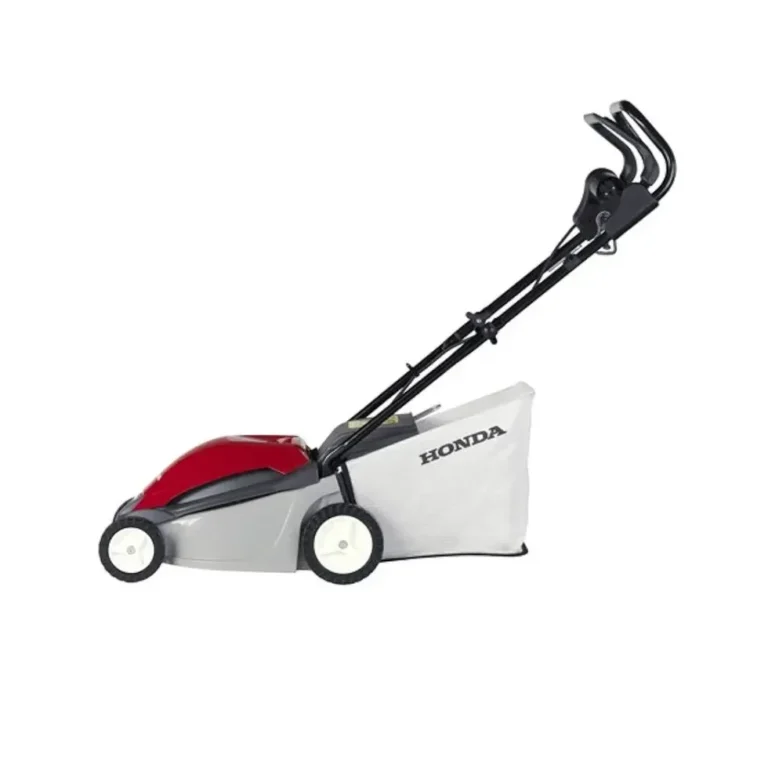
Honda HRC-BE 21-Inch Commercial Battery Powered Lawn Mower (HRC216EXA6) | 12 AH Battery Powered Variable Speed Self Propelled Lawn Mower, 2 Battery Bays, 2.5 Bushel Capacity, Easy-Off Grass Bag

Technical Specifications
- ColorRed
- Number Of Items1
- Electric Mower With 2 Battery BaysThe HRC-BE electric lawn mower comes with a 12 AH lithium-ion battery with up to 45 minutes of run time, or about 0
- Adjustable Cutting HeightThis battery lawn mower offers a dual-lever height adjustment system that offer 8 cutting heights between 0.75-4 in
Alternatives Worth Considering
-

SENIX 201cc 22″ 3-in-1 Variable Speed Self Propelled Gas Lawn Mower | Self Propelled Lawn Mower, 22″ Self Propelled Gas Lawn Mower, 6 Height Adjustable
The Amazon listing notes Powerful 201cc OHV Engine-Powered by a reliable 201cc 4-cycle OHV engine, this lawn mower delivers strong, consistent perform. Check whether this self propelled lawn mower fits your requirements and compare its specifications before bu.
-

YARDMAX 22 in. 201cc Select PACE 6 Speed CVT High Wheel FWD 3-in-1 Gas Walk Behind Self Propelled Lawn Mower, Black (YG2860)
The Amazon listing notes Exclusive and industry-leading CVT (Continuously variable transmission) offers superior speed variability to adjust the mower. Check whether this self propelled lawn mower fits your requirements and compare its specifications before bu.
-

Greenworks 80V 21in Self-Propelled Lawn Mower, 4.0 Ah Battery and Charger | Brushless motor with LED headlight and rapid charger; self-propelled drive reduces effort on larger lawns.
The Amazon listing notes [80V 21” SELF-PROPELLED LAWN MOWER] – Get more done, faster, with Greenworks electric lawn mowers. This 80V lawn mower cuts u. Check whether this self propelled lawn mower fits your requirements and compare its specifications before bu.
Honda HRC-BE Review at a Glance
The Honda HRC-BE is a commercial-oriented, self-propelled battery mower built around a 21-inch deck, variable ground speed, two battery bays, and bagging or mulching flexibility. It looks most suitable for larger residential lawns and light commercial work where controlled forward speed matters more than the smallest possible size.
Its strongest point is the combination of a 2.0 kW motor claim, adjustable drive speed from 0 to 4 mph, and an advertised 2.5-bushel bag. Its biggest question is coverage: up to 45 minutes or about 0.37 acre per charge may be enough for some lawns but not every property.
Key Specifications:
- Cutting width: 21 inches
- Battery: 12 Ah lithium-ion battery
- Battery bays: 2
- Advertised runtime: Up to 45 minutes per charge
- Advertised coverage: About 0.37 acre per charge
- Drive speed: Adjustable from 0 to 4 mph
- Cutting height: 8 settings from 0.75 to 4 inches
- Grass bag capacity: 2.5 bushels
- Motor claim: 2.0 kW commercial-grade motor
- Color: Red
The runtime and coverage figures come from the supplied product information. They should not be treated as independent test results, and the information does not confirm how the second battery bay operates in every mowing situation.
Honda HRC-BE Features and Benefits
The Honda HRC-BE focuses on the parts that affect mowing time and control: battery power, self-propelled speed adjustment, cutting flexibility, and clipping collection. Those features can help on a larger lawn, but the mower still needs a battery plan and enough storage space.
Commercial-style motor for demanding grass
The listed 2.0 kW HRC motor is described as offering 33% more power and torque than Honda residential mowers. That is a manufacturer or seller claim, not an independent performance result, but the intended benefit is clear: the mower is designed to keep cutting power available in thicker or taller grass.
Power does not remove the need for good mowing habits. Tall, wet grass can reduce battery range and place more load on the blade and motor, so raising the deck or making a slower first pass may still be sensible.
A buyer comparing electric models may first ask whether Honda makes an electric mower. The HRC-BE shows that the answer depends on the exact model and market, not just on the brand name.
Two battery bays and a 12 Ah battery
The HRC-BE is listed with a 12 Ah lithium-ion battery and two battery bays. Honda states up to 45 minutes of runtime, or about 0.37 acre, per charge, while the catalog wording suggests that the second bay can extend total mowing time.
The exact battery-switching behavior, charging time, and whether a second battery is included are not confirmed in the supplied facts. Check those details before buying if your lawn is close to the advertised coverage limit.
Runtime also changes with drive speed, cutting height, grass density, slope, and whether clippings are collected. A flat, regularly cut lawn may demand less energy than a thick lawn with frequent bagging.
Variable-speed self-propelled drive
The Electric Cruise Control transmission is listed as adjustable from 0 to 4 mph. A speed lever lets you match the mower’s pace to your walking speed, lawn slope, and cutting conditions.
That range is useful because a fixed self-propelled speed can feel too fast in tight areas and too slow on open ground. A slower setting can also give the blade more time to handle heavy grass, although the effect on runtime depends on the full mowing situation.
The drive system adds convenience but also adds complexity compared with a push mower. Keep the control area clean, avoid forcing the mower through obstacles, and follow the manual for inspection or service steps.
Twin-blade MicroCut system
The catalog describes a twin-blade MicroCut system with four cutting surfaces. Its stated purpose is to create finer clippings that fit more efficiently into the 2.5-bushel grass bag.
Finer clippings can also support mulching when conditions are suitable. The included mulching plug gives you another way to return cut grass to the lawn instead of stopping to empty the bag.
Blade sharpness, mowing height, and grass moisture still affect the result. A multi-blade design is not a substitute for clearing sticks, avoiding hidden objects, or keeping the deck free of packed grass.
Eight cutting heights
The dual-lever height system offers eight settings from 0.75 to 4 inches. That range covers short cuts through a taller setting that can be useful during hot, dry periods or when the lawn has grown too high.
A higher cut generally leaves more leaf surface, while a low setting may require more care to avoid scalping uneven ground. The right height depends on grass type, season, shade, and lawn condition.
Before changing the height, stop the mower and follow the safety procedure in the owner’s manual. Do not reach under the deck while the battery is installed.
Bagging and mulching flexibility
The 2.5-bushel bag is a useful size for buyers who want fewer emptying stops than a small residential bag may provide. The easy-off design is intended to make removal and emptying less awkward.
Bagging takes more energy than simply leaving clippings behind because the mower must move and collect material. If battery range matters more than a clean-looking surface, mulching may reduce stops and handling.
The right choice also depends on leaf volume and local disposal rules. Keep the bag, opening, and deck clear so airflow is not blocked by wet clippings.
What to Look for in a Self-Propelled Lawn Mower Before You Buy
A self-propelled lawn mower should fit the lawn, the operator, and the storage routine. For the HRC-BE, the most important checks are battery coverage, deck access, speed control, cutting height, and maintenance needs.
Battery range and lawn size
Start with the area you actually mow, not the total size of the property. Buildings, beds, trees, and paved areas reduce the grass area, while slopes, heavy growth, bagging, and repeated passes increase energy use.
The HRC-BE’s advertised figure is up to 45 minutes or about 0.37 acre per charge. Treat that as a planning number with a safety margin rather than mowing until the battery is nearly empty every time.
If your lawn is close to that limit, confirm the second-battery setup, included battery count, charger details, and replacement battery availability. Those facts can change the ownership experience more than the motor rating.
Deck width and access
A 21-inch deck gives a useful balance between coverage and maneuverability. Measure narrow gates, shed doors, side yards, and the space between landscaping before buying.
A larger commercial-style mower can feel less convenient in small yards with many turns. If most of your mowing involves tight corners, a lighter or narrower model may save time even if it covers less grass per pass.
For buyers comparing residential and commercial Honda models, the difference between Honda HRX-BE and HRC-BE matters most when the lawn and workload justify the larger-duty design. Do not pay for commercial features that your yard will rarely use.
Drive speed and terrain
Adjustable speed is valuable on slopes, open sections, and areas with obstacles. The HRC-BE lists a range from 0 to 4 mph, letting you slow down near beds and increase pace on open lawn.
Self-propulsion does not mean the mower can safely handle every slope. Walk across slopes when appropriate, keep both hands available for control, and follow the manual’s limits for terrain and operation.
A drive system also needs more attention than a simple push mower. Ask whether the controls, wheels, and transmission can be serviced through the manufacturer’s support network in your area.
Cutting height and clipping method
The HRC-BE offers eight height settings from 0.75 to 4 inches, plus a mulching plug and a bagging system. That is a useful range for changing seasonal conditions.
Check whether the lowest setting is appropriate for your grass and soil. In uneven yards, a low cut can expose soil or scalp high spots, while a taller setting may be more forgiving.
Think about the time spent handling clippings. Bagging keeps the surface tidy but fills the container and uses more energy; mulching reduces handling but works best when the grass is not excessively tall or wet.
Support, storage, and ownership cost
The supplied data does not confirm the warranty, charger time, replacement battery price, mower weight, noise level, or service schedule. Check those points before purchase, especially if the mower will be used for paid work.
Store the mower and battery in a dry, protected location. Follow the battery maker’s temperature and charging instructions rather than leaving a battery in extreme heat, freezing conditions, or a damp shed.
A useful comparison is not only the purchase price. Include extra batteries, blade replacement, storage space, charging access, and possible service costs when comparing the HRC-BE with a gas or residential electric mower.
Honda HRC-BE Pros and Cons
The Honda HRC-BE offers a strong feature set for a battery mower, but its commercial design and advertised battery range may not fit every property.
Pros:
- 21-inch cutting width for solid coverage on open lawn
- 2.0 kW motor listed as commercial grade
- 12 Ah lithium-ion battery listed with up to 45 minutes of runtime
- Two battery bays for potentially longer mowing sessions
- Variable self-propelled speed from 0 to 4 mph
- Eight cutting heights from 0.75 to 4 inches
- Twin-blade cutting system, mulching plug, and 2.5-bushel bag
Cons:
- Battery runtime depends heavily on grass, terrain, speed, and bagging
- The supplied facts do not confirm whether a second battery is included
- Weight, noise, charging time, warranty, and service details are not provided
- A commercial-style mower may be more machine than a small or tightly planted yard needs
The biggest downside is uncertainty around full ownership details. The listed range may suit a medium or larger lawn, but buyers near the 0.37-acre estimate should confirm battery and charger information before committing.
Who Should Buy the Honda HRC-BE and Who Should Skip It
The Honda HRC-BE makes the most sense for buyers who want self-propelled control, a wide cutting path, and battery operation without giving up a commercial-oriented motor and cutting system.
Choose It If:
- You mow a medium or larger lawn with enough open space to benefit from a 21-inch deck.
- You want adjustable walking speed, a high cutting-height range, and a choice between bagging and mulching.
- You can charge the battery between sessions and are willing to confirm how the two battery bays work.
The mower may also suit light professional use when quiet electric operation and controlled drive speed matter. Confirm warranty and service terms first if the mower will earn money or operate frequently.
Skip It If:
- Your lawn is small, narrow, or filled with tight turns where a commercial 21-inch mower may feel cumbersome.
- You need a guaranteed full-yard runtime but cannot add or charge another battery.
- You want a very light mower, a confirmed low-noise rating, or simple push-mower mechanics.
The HRC-BE is not automatically the right choice just because it carries a commercial label. A residential model may be a better fit when lower weight, simpler storage, or lower ownership cost matters more than maximum cutting capacity.
How to Use and Care for the Honda HRC-BE
Safe battery-mower care starts before the first cut. Keep the battery and charger dry, remove the battery before cleaning or working near the blade, and read the manual for the exact shutdown and storage procedure.
Prepare the lawn and mower
Walk the mowing area and remove sticks, stones, wire, toys, and other objects. Hidden debris can damage blades or become a dangerous projectile.
Check that the bag, mulching plug, height levers, wheels, and controls are properly fitted. Do not mow with a damaged bag, loose part, or blocked discharge opening.
Set the cutting height before starting. Use a taller setting when grass is long or the lawn is dry and stressed rather than trying to remove too much growth in one pass.
Mow with the battery in mind
Begin with a fully charged battery and avoid waiting until the last possible moment if the lawn is near the advertised coverage. Keep the blades sharp according to the manual, since dull blades can make cutting slower and increase energy demand.
Use a pace that gives the mower time to cut cleanly. Overlapping passes slightly is normal, but repeated passes over the same area waste battery power.
Pro Tip: Bagging is useful when you want a clean surface, but mulching can reduce emptying stops and material handling when the grass is short and dry enough to break down well.
Empty the bag safely
Stop the mower, disengage the drive and blade controls, and wait for moving parts to stop before removing the bag. Keep hands and feet away from the deck opening.
Do not carry a full bag farther than needed if lifting is difficult. Wet clippings can be much heavier than dry grass, and an overloaded bag can reduce airflow.
Check the bag and discharge path for packed material. Clear blockages only with the battery removed and the mower fully stopped.
Clean and inspect after mowing
Follow the manual for the correct cleaning method. Remove the battery before inspecting the underside, and do not spray water into electrical areas, controls, battery contacts, or the charger.
Brush away dry grass from the deck and cooling areas. Look for bent blades, loose fasteners, damaged wheels, torn bag fabric, or controls that do not move normally.
The catalog does not provide a fixed maintenance interval. Use the owner’s manual for blade inspection, sharpening, lubrication, transmission care, battery storage, and service timing.
Important Tip: Do not store the battery in a hot vehicle, freezing location, or wet shed. Use the charging equipment and temperature limits specified by the manufacturer.
Store it between seasons
Clean and dry the mower before long-term storage. Keep the machine protected from rain and place the battery where it cannot be crushed, punctured, or exposed to children.
Do not guess at long-term battery charge levels. Follow the manual’s storage instructions, and inspect the battery for swelling, damage, unusual heat, or leakage before charging.
Stop using the battery or mower if damage appears. Contact qualified service support rather than opening the battery pack or attempting electrical repairs.
Common Questions People Ask About the Honda HRC-BE
Is the Honda HRC-BE a commercial lawn mower?
Yes, the supplied product information presents the HRC-BE as a commercial battery mower with a listed 2.0 kW HRC motor and commercial-oriented features. That label does not independently confirm durability, service life, or professional warranty coverage, so check those details before paid use.
How long can the Honda HRC-BE mow on one charge?
Honda lists up to 45 minutes of runtime and about 0.37 acre per charge. Actual results can be lower or higher depending on grass height, moisture, slope, drive speed, blade condition, and whether the mower is bagging clippings.
Does the Honda HRC-BE have variable self-propelled speed?
Yes, the product information lists an adjustable self-propelled speed from 0 to 4 mph. That range lets you slow down in tight areas and move faster across open lawn, though terrain and operator control still determine safe mowing speed.
Can the Honda HRC-BE mulch and bag grass?
Yes, the mower is listed with a mulching plug and a 2.5-bushel grass bag. Bagging collects clippings for removal, while mulching returns finer clippings to the lawn. Wet or overly tall grass can reduce the quality of either method.
What cutting heights does the Honda HRC-BE offer?
The HRC-BE has eight listed cutting-height settings from 0.75 to 4 inches. Set the height for the grass and conditions rather than always using the lowest setting, especially on uneven ground or during hot, dry weather.
Is a second battery included with the Honda HRC-BE?
The supplied details confirm a 12 Ah battery and two battery bays, but they do not clearly confirm that a second battery is included. Confirm the package contents, charger, charging time, and battery-switching behavior before buying.
Should You Buy the Honda HRC-BE?
The Honda HRC-BE is a reasonable choice for a buyer who wants a self-propelled battery mower with commercial-oriented features, adjustable speed, a 21-inch deck, and flexible bagging or mulching. Its listed 12 Ah battery, two-bay design, and advertised 45-minute runtime give it useful range potential.
The main limitation is that battery coverage depends on conditions, and several ownership details remain unconfirmed. Buyers with small yards, tight access, or a strong need for low weight may be happier with a simpler residential mower.
If your lawn is near the advertised 0.37-acre coverage, confirm the battery package and charging plan before purchase. For the right property, the HRC-BE offers a thoughtful mix of control and cutting capacity; for the wrong one, its commercial design may add cost and bulk without enough benefit.